
 EN
EN



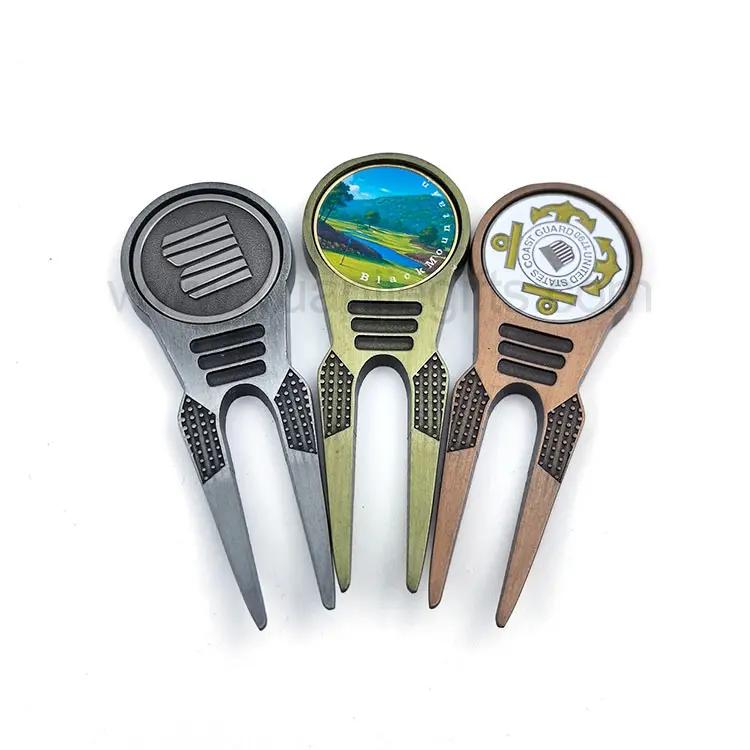
When golfers talk about course etiquette, repairing pitch marks is one of the most fundamental responsibilities on the green. The small handheld instruments used for this task — divot tools — may appear simple at first glance, but their manufacturing process is far more involved than most golfers realize. Understanding how high-quality divot tools are made reveals why there is such a significant difference in feel, durability, and performance between a premium forged piece and a generic stamped alternative.
The manufacturing of high-quality divot tools involves a carefully controlled sequence of material selection, forming, finishing, and quality inspection. Each stage directly influences the final product's weight, balance, tine sharpness, and longevity. For golf brands, corporate gift buyers, and pro shop buyers sourcing custom divot tools, understanding this process helps set realistic expectations and make smarter procurement decisions. This article walks through the full manufacturing journey of premium divot tools, from raw material to finished product.
Material Selection: The Foundation of Quality Divot Tools
Why Metal Choice Determines Long-Term Performance
The manufacturing process of high-quality divot tools begins long before any shaping takes place. It starts with the selection of raw materials, and this decision has a cascading effect on every subsequent step. The most respected divot tools on the market are made from metals such as brass, copper, zinc alloy, or stainless steel. Each material brings a distinct combination of density, workability, corrosion resistance, and surface finish potential.
Brass is particularly favored in premium divot tools because it offers an excellent balance of machinability and aesthetic appeal. It responds well to forging, holds fine detail during engraving, and develops a rich patina over time that many golfers find desirable. Copper shares similar characteristics and is often chosen when a warmer, more distinctive visual tone is required. Stainless steel, on the other hand, is selected when maximum corrosion resistance and a modern appearance are priorities.
The purity and grade of the chosen metal also matter. Lower-grade alloys may contain inconsistencies that cause surface defects during forming or uneven hardness that leads to premature wear. Reputable manufacturers source certified metal stock and conduct incoming material inspections before production begins. This upstream quality control is one of the clearest differentiators between high-quality divot tools and budget alternatives.
Custom Alloy Blending for Specialized Applications
Some manufacturers go a step further by working with custom alloy compositions tailored to specific performance requirements. For example, a divot tool intended for heavy daily use on a professional tour might use a slightly harder brass alloy to resist deformation at the tine tips, while a commemorative or gift-grade divot tool might prioritize a softer alloy that accepts deep laser engraving with exceptional clarity.
This level of material engineering is rarely visible to the end user but is deeply felt in the hand. A well-chosen alloy gives divot tools a satisfying heft, a smooth action when the tines engage the turf, and a surface that holds plating or coating without peeling or flaking over years of use. Material selection is therefore not a background decision — it is a core engineering choice that defines what the finished divot tools will be capable of.
The Forging Process: Shaping Divot Tools Under Pressure
Cold Forging vs. Hot Forging in Divot Tool Production
Once the raw material is prepared, the forming stage begins. For high-quality divot tools, forging is the preferred method over casting or stamping. Forging involves applying compressive force to shape metal, and this process produces a denser, stronger grain structure within the material compared to other forming methods. The result is a divot tool that is more resistant to bending, cracking, and surface fatigue.
Cold forging is performed at or near room temperature and is well-suited for smaller, precision components like divot tools. The metal is placed into a die and struck with controlled force, taking on the exact shape of the die cavity. Because no heat is applied, the metal retains its full hardness and the dimensional accuracy is very high. Cold-forged divot tools typically require less post-processing and exhibit tighter tolerances than their cast counterparts.
Hot forging, by contrast, heats the metal to a malleable state before forming. This approach is used when the design requires more complex geometry or when working with harder alloys that would crack under cold forging pressure. Hot-forged divot tools may require additional machining to achieve final dimensions, but the process allows for more intricate shapes and can produce a particularly refined grain flow that enhances structural integrity.
Die Design and Its Impact on Tine Geometry
The quality of the forging die directly determines the quality of the divot tools produced from it. Die design is a precision engineering task that requires careful consideration of tine angle, tip radius, handle ergonomics, and draft angles that allow the finished piece to release cleanly from the die. A poorly designed die produces divot tools with inconsistent tine geometry, which translates to uneven turf penetration and potential green damage.
High-quality die sets are typically CNC-machined from hardened tool steel and are capable of producing thousands of consistent pieces before requiring replacement. The investment in precision tooling is significant, but it is what enables manufacturers to deliver divot tools with repeatable quality across large production runs. For buyers ordering custom divot tools in volume, the quality of the manufacturer's tooling infrastructure is a critical factor to evaluate.
Tine geometry deserves special attention because it directly affects how well the divot tool performs its primary function. The ideal tine for green repair is tapered to allow easy insertion, angled to lift and push turf rather than tear it, and finished to a smooth tip that glides through the grass without snagging. These characteristics are built into the die design and refined through iterative testing before full production begins.
Machining, Trimming, and Surface Preparation
Post-Forging Machining for Precision and Consistency
After forging, divot tools undergo a series of machining and trimming operations to remove flash — the thin excess metal that squeezes out between die halves during forming — and to bring all dimensions within final tolerances. This stage typically involves trimming presses, CNC lathes, and milling machines depending on the complexity of the design.
For divot tools with integrated ball markers, magnetic inserts, or pivot mechanisms, additional machining steps are required to create the precise cavities and threads needed for assembly. The tolerances at this stage are tight, often within fractions of a millimeter, because any looseness in a pivot joint or magnetic seat will be immediately noticeable during use. Skilled machinists and well-maintained equipment are essential to achieving these standards consistently.
Surface preparation follows machining and involves a sequence of grinding, filing, and polishing steps that progressively refine the surface texture. The goal is to remove all tool marks, parting lines, and minor surface defects before any coating or plating is applied. The quality of surface preparation is one of the most visible indicators of manufacturing excellence in finished divot tools — a smooth, uniform surface reflects light evenly and accepts decorative finishes without telegraphing underlying imperfections.
Polishing and Buffing Techniques Used in Premium Production
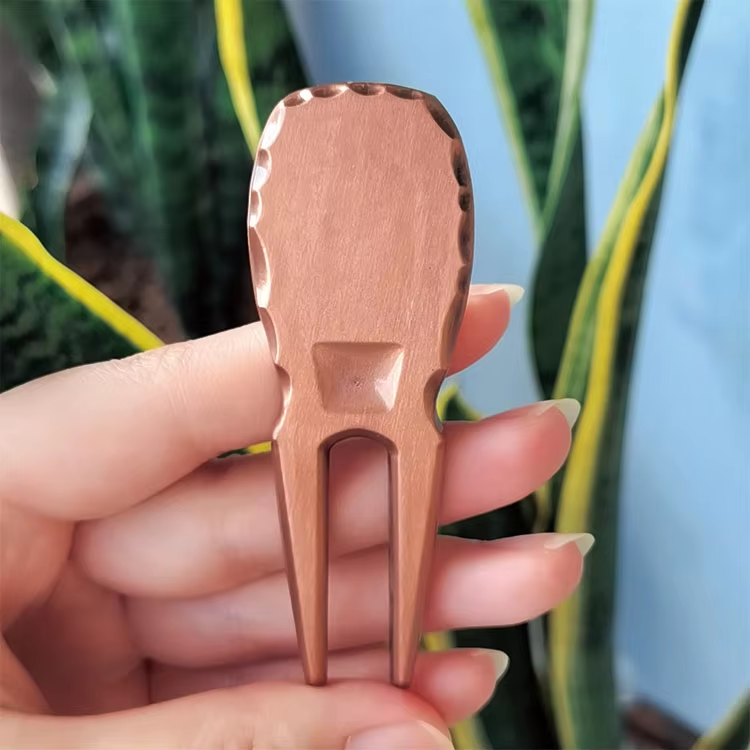
Polishing is both a functional and aesthetic step in the manufacture of high-quality divot tools. Functionally, a well-polished surface is more resistant to corrosion because it has fewer microscopic pits and crevices where moisture and contaminants can accumulate. Aesthetically, polishing determines whether the finished divot tool has a mirror-bright, satin, or brushed appearance — each of which appeals to different market segments.
Barrel tumbling is commonly used for initial deburring and surface smoothing. Parts are loaded into a rotating drum with abrasive media and tumbled for a controlled period. This process efficiently removes sharp edges and light surface irregularities across large batches. For finer finishing, hand polishing or automated polishing wheels are used to achieve the specific surface quality required by the design specification.
The transition from rough to fine polishing is gradual, with each stage using progressively finer abrasives. Skipping steps or rushing this process results in a surface that looks acceptable under normal lighting but reveals swirl marks and inconsistencies under close inspection. Premium divot tools are polished to a standard that holds up under scrutiny, which is particularly important for corporate gift applications where the product reflects directly on the brand presenting it.
Plating, Coating, and Custom Finishing
Electroplating Processes Applied to Divot Tools
Once the base metal has been shaped and polished, most high-quality divot tools receive a surface treatment to enhance appearance, corrosion resistance, or both. Electroplating is the most common method, involving the deposition of a thin metallic layer onto the substrate through an electrochemical process. Common plating options for divot tools include nickel, chrome, gold, rose gold, and antique bronze.
The plating process begins with thorough cleaning of the substrate to remove any oils, oxides, or residues that would prevent proper adhesion. The parts are then immersed in a plating bath containing dissolved metal salts, and an electrical current causes metal ions to deposit uniformly onto the surface. Plating thickness is carefully controlled — too thin and the coating wears through quickly, too thick and it can obscure fine engraved details.
For divot tools intended as premium gifts or branded merchandise, multi-layer plating is sometimes used. A base layer of copper or nickel provides adhesion and corrosion protection, while a top layer of gold or chrome delivers the desired visual effect. This layered approach produces a more durable and visually consistent finish than single-layer plating and is a hallmark of genuinely high-quality divot tools.
Custom Engraving, Enamel Fill, and Logo Application
Customization is a major driver of demand for premium divot tools, particularly in the corporate gifting and promotional merchandise sectors. The most common customization techniques include laser engraving, die-struck engraving, soft enamel fill, and printed logo application. Each method has distinct characteristics in terms of depth, color capability, and durability.
Die-struck engraving creates recessed designs by pressing a hardened die into the metal surface. This method produces crisp, permanent impressions that are integral to the metal itself and will never peel or fade. It is the preferred technique for logos and text that need to maintain their appearance over years of use. Laser engraving offers more flexibility for complex artwork and fine detail but produces a shallower mark that may be less visible on highly polished surfaces.
Soft enamel fill adds color to recessed areas created by engraving or die-striking. The enamel is applied by hand, cured, and then polished flush with the surrounding metal surface. This technique allows divot tools to carry full-color logos or decorative elements while maintaining a premium metal aesthetic. The combination of metal craftsmanship and color customization makes enamel-filled divot tools particularly popular as tournament prizes and executive gifts.
Quality Control and Final Inspection
Dimensional and Functional Testing Standards
Before divot tools leave the production facility, they undergo a structured quality control process designed to catch any defects that escaped earlier inspection points. Dimensional checks verify that tine length, spacing, handle dimensions, and overall weight fall within the specified tolerances. Functional testing confirms that pivot mechanisms operate smoothly, magnetic ball markers hold securely, and tines maintain their geometry under simulated use loads.
Visual inspection is conducted under controlled lighting conditions to identify surface defects such as pitting, plating voids, polishing marks, or enamel inconsistencies. Inspectors trained to recognize subtle quality issues examine each piece individually or use automated vision systems for high-volume runs. Any divot tools that fail inspection are either reworked if the defect is correctable or rejected and recycled if it is not.
Salt spray testing is sometimes applied to evaluate the corrosion resistance of the plating system, particularly for divot tools destined for humid climates or outdoor storage. This accelerated test exposes samples to a saline mist for a defined period and checks for any signs of base metal corrosion or plating delamination. Passing this test gives buyers confidence that the divot tools will maintain their appearance throughout their intended service life.
Packaging and Presentation as Part of the Quality Experience
For premium and custom divot tools, the packaging is considered an extension of the product quality. A beautifully crafted divot tool presented in a flimsy plastic bag sends a contradictory message about value. High-quality manufacturers offer packaging options that match the caliber of the product — velvet pouches, rigid gift boxes, custom foam inserts, and branded sleeves are all common choices for corporate and tournament applications.
Packaging also serves a protective function during shipping and storage. Divot tools with polished or plated surfaces are susceptible to scratching if they contact each other or abrasive surfaces during transit. Proper individual wrapping or compartmentalized packaging prevents cosmetic damage and ensures that the product arrives in the same condition it left the factory. This attention to the complete delivery experience is a distinguishing characteristic of manufacturers who take quality seriously at every stage.
FAQ
What materials are most commonly used to manufacture high-quality divot tools?
High-quality divot tools are most commonly made from brass, copper, zinc alloy, or stainless steel. Brass and copper are particularly popular for premium and custom divot tools because they forge well, accept detailed engraving, and develop an attractive appearance over time. The specific alloy chosen depends on the intended use, desired finish, and budget of the production run.
Why is forging preferred over casting for premium divot tools?
Forging produces a denser, more uniform grain structure in the metal compared to casting, which results in stronger and more durable divot tools. Cast parts can contain internal porosity and inconsistencies that weaken the structure and create surface defects. Forged divot tools hold their shape better under repeated use and provide a more satisfying weight and feel in the hand.
How is custom branding applied to divot tools without compromising quality?
Custom branding on divot tools is typically applied through die-struck engraving, laser engraving, or soft enamel fill. Die-struck engraving creates permanent recessed impressions that are integral to the metal and will not fade or peel. Soft enamel fill adds color to these recessed areas, allowing full-color logos to be incorporated while maintaining the premium metal aesthetic of the finished divot tools.
What quality control steps should buyers look for when sourcing divot tools?
Buyers sourcing divot tools should look for manufacturers who conduct incoming material inspection, dimensional and functional testing after production, visual inspection under controlled lighting, and corrosion resistance testing for plated finishes. Asking for sample pieces before committing to a full order is also a practical way to evaluate the actual quality of a manufacturer's divot tools against their stated specifications.