
 EN
EN




Golf accessories have evolved significantly over the years, incorporating innovative technologies and materials to enhance player performance and convenience. Among these innovations, magnets have found a particularly important role in various golf accessories, with magnetic golf ball marker being one of the most practical and popular applications. These magnetic solutions offer golfers improved functionality, durability, and ease of use on the course, making them essential components in modern golf equipment.
The integration of magnetic technology in golf accessories represents a perfect blend of science and sport, providing solutions that address common challenges faced by golfers during play. From securing ball markers to organizing equipment, magnets have revolutionized how golfers interact with their accessories. Understanding the various applications and benefits of magnetic components in golf accessories helps players make informed decisions about their equipment choices and appreciate the engineering behind these innovative solutions.
Core Applications of Magnetic Technology in Golf Equipment
Ball Marking and Positioning Systems
The most prominent use of magnets in golf accessories centers around ball marking systems, where a magnetic golf ball marker serves as an essential tool for precise ball positioning on the green. These markers utilize strong neodymium magnets that securely attach to various surfaces while remaining easy to remove when needed. The magnetic attachment system ensures that markers stay in place even in windy conditions or when other players walk nearby, providing reliable performance throughout the round.
Professional golfers and amateurs alike appreciate how magnetic golf ball marker systems eliminate the frustration of lost or displaced markers during play. The magnetic connection creates a secure bond that prevents accidental movement while still allowing for quick and easy removal when it's time to replace the ball. This reliability has made magnetic markers increasingly popular in tournament play, where precision and consistency are paramount.
Modern magnetic marking systems often incorporate additional features such as interchangeable marker designs, allowing golfers to customize their equipment while maintaining the functional benefits of magnetic attachment. These systems typically include a magnetic base that attaches to belt clips, divot tools, or hat brims, providing convenient access to the magnetic golf ball marker throughout the round.
Equipment Organization and Storage Solutions
Beyond ball markers, magnets play crucial roles in organizing and securing various golf accessories within bags and on equipment. Magnetic strips and holders help keep small metal accessories like tees, ball markers, and divot repair tools organized and easily accessible. These organizational systems prevent items from getting lost in the depths of golf bags and reduce the time spent searching for essential accessories during play.
Golf bag manufacturers increasingly incorporate magnetic closures and compartments to enhance functionality and user experience. These magnetic systems provide secure closure for pockets while remaining easy to open with one hand, allowing golfers to access their equipment quickly without disrupting their rhythm or focus during play. The strength and reliability of modern magnets ensure that these closures withstand the rigors of regular golf course use.
Magnetic tool holders attached to golf carts or pushcarts offer additional convenience by keeping essential accessories within easy reach throughout the round. These holders can accommodate multiple tools simultaneously, including magnetic golf ball marker sets, divot tools, and cleaning brushes, creating an organized and efficient setup for serious golfers.
Technical Specifications and Material Considerations
Magnet Types and Strength Requirements
The effectiveness of magnetic golf accessories depends heavily on the type and strength of magnets used in their construction. Neodymium rare earth magnets are the preferred choice for most golf applications due to their exceptional strength-to-size ratio and resistance to demagnetization. These magnets provide the holding power necessary for reliable performance while remaining compact enough for practical use in golf accessories.
Magnetic strength requirements vary depending on the specific application, with magnetic golf ball marker systems typically requiring pull forces between 5-15 pounds to ensure secure attachment without making removal difficult. This balance ensures that markers stay in place during normal course conditions while remaining easy to manipulate when needed. Engineers carefully calculate these specifications to optimize performance for golf-specific applications.
Temperature stability represents another critical consideration in magnet selection for golf accessories. Golf courses present varying environmental conditions, from hot summer days to cold winter rounds, and magnets must maintain their strength and performance across these temperature ranges. High-quality neodymium magnets retain their magnetic properties effectively across the temperature variations typically encountered in golf.
Durability and Weather Resistance Features
Golf accessories must withstand exposure to moisture, temperature fluctuations, and physical impacts common in outdoor golf environments. Magnetic components in golf accessories receive protective coatings to prevent corrosion and maintain their appearance over extended use. Nickel plating, epoxy coatings, and stainless steel housings protect magnets from moisture and oxidation while preserving their magnetic strength.
The housing and mounting systems for magnetic golf ball marker assemblies require careful engineering to protect the magnets while maintaining functionality. Impact-resistant materials and shock-absorbing designs help prevent damage when accessories are dropped or subjected to the normal wear and tear of golf course use. These protective measures ensure long-term reliability and consistent performance throughout the accessory's lifespan.
UV resistance becomes important for accessories exposed to direct sunlight during rounds, as prolonged sun exposure can degrade certain materials and coatings. Manufacturers select materials and finishes that maintain their appearance and protective properties even after extensive exposure to ultraviolet radiation, ensuring that magnetic golf accessories remain functional and attractive over time.
Design Innovation and Customization Options
Aesthetic Integration and Personalization
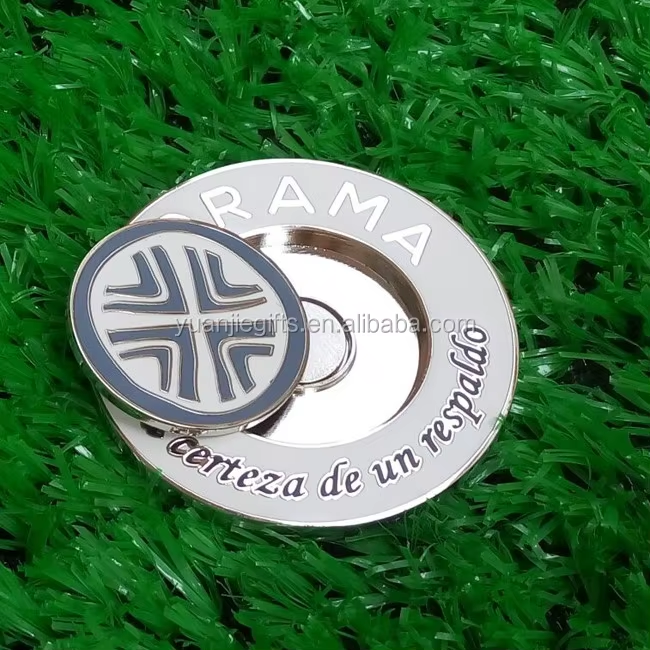
Modern magnetic golf accessories seamlessly integrate functional magnetic components with attractive designs that reflect personal style and preferences. Customizable magnetic golf ball marker designs allow golfers to express their personality while maintaining the practical benefits of magnetic attachment systems. These personalization options include custom logos, colors, and decorative elements that make each marker unique to its owner.
The manufacturing process for customized magnetic markers accommodates various decoration techniques, including enamel filling, laser engraving, and printed graphics. These decorative options maintain the integrity of the magnetic system while providing unlimited design possibilities. Professional tournament players often utilize custom magnetic golf ball marker designs featuring sponsor logos or personal branding elements.
Magnetic attachment systems enable easy swapping of decorative elements, allowing golfers to change their marker designs to match different outfits, occasions, or preferences. This modularity adds value to the investment in magnetic accessories while providing ongoing customization opportunities that keep the equipment fresh and personally meaningful.
Ergonomic Considerations and User Experience
The design of magnetic golf accessories prioritizes user comfort and ease of operation, recognizing that golfers need quick and effortless access to their equipment during play. Ergonomic considerations include the size, shape, and texture of magnetic components to ensure comfortable handling even with wet or gloved hands. These design elements enhance the overall user experience while maintaining the functional benefits of magnetic technology.
Magnetic release mechanisms incorporate user-friendly features that provide clear tactile feedback when engaging or disengaging the magnetic connection. This feedback helps golfers confidently use their magnetic golf ball marker systems without looking away from their target or disrupting their pre-shot routine. The intuitive operation of well-designed magnetic systems becomes second nature after minimal use.
Size optimization balances magnetic strength requirements with practical handling considerations, ensuring that accessories provide adequate holding power without becoming bulky or cumbersome to use. This optimization process involves extensive testing and refinement to achieve the ideal balance between functionality and user comfort in real-world golf conditions.
Performance Benefits and Practical Advantages
Efficiency and Convenience Improvements
Magnetic golf accessories significantly improve the efficiency of common golf tasks, reducing the time and effort required for routine activities like marking balls and organizing equipment. The quick attachment and release capabilities of magnetic systems eliminate fumbling with traditional mechanical fasteners or clips, allowing golfers to focus on their game rather than their equipment. This efficiency becomes particularly valuable during competitive play where every second counts.
The reliability of magnetic attachment systems reduces anxiety about lost or misplaced accessories, allowing golfers to concentrate fully on their shots and strategy. When players trust their magnetic golf ball marker system to perform consistently, they can maintain their mental focus throughout the round without worrying about equipment failures or malfunctions. This peace of mind contributes to better overall performance on the course.
Magnetic systems also accommodate one-handed operation in many cases, which proves valuable when golfers need to mark their ball while holding their putter or when retrieving markers from difficult positions on the green. This operational convenience enhances the flow of play and reduces physical strain during extended rounds.
Precision and Accuracy Benefits
The secure attachment provided by magnetic systems enables more precise ball positioning and marking compared to traditional methods. A properly designed magnetic golf ball marker stays exactly where placed, eliminating the slight movements that can occur with loose-fitting mechanical systems. This precision becomes crucial in competitive situations where accurate ball replacement affects scoring and rule compliance.
Magnetic markers typically feature slim profiles that minimize interference with putting lines and ball rolls, while still providing clear visual reference points for accurate ball replacement. The low-profile design of quality magnetic markers reduces the likelihood of balls deflecting off the marker during play, maintaining fair conditions for all players on the green.
Consistent positioning capabilities of magnetic systems help golfers develop reliable pre-shot routines and alignment techniques. When equipment performs predictably, players can focus on perfecting their technique and strategy rather than compensating for equipment variations or failures.
Maintenance and Care Requirements
Cleaning and Preservation Techniques
Proper maintenance of magnetic golf accessories ensures optimal performance and longevity, requiring specific techniques that preserve both the magnetic properties and the overall condition of the equipment. Regular cleaning removes dirt, grass, and debris that can interfere with magnetic attraction and degrade the appearance of accessories. Gentle cleaning methods using mild soap and water effectively maintain magnetic golf ball marker systems without damaging protective coatings or decorative elements.
Avoiding harsh chemicals and abrasive cleaning materials prevents damage to magnetic coatings and decorative finishes that could compromise performance or appearance. Specialized cleaning products designed for golf accessories provide effective cleaning while protecting the integrity of magnetic components and their protective systems.
Proper storage practices protect magnetic accessories from environmental factors that could degrade performance over time. Storing magnetic components away from extreme temperatures and moisture helps preserve their magnetic strength and prevents corrosion of metal components. Organized storage also prevents magnetic accessories from attracting metal debris that could interfere with their operation.
Performance Monitoring and Replacement Guidelines
Regular assessment of magnetic strength ensures that golf accessories continue performing at optimal levels throughout their service life. Simple tests using the magnetic golf ball marker under normal operating conditions help identify any degradation in magnetic performance that might require attention or replacement. Maintaining performance standards ensures consistent reliability during important rounds or competitive play.
Replacement schedules based on usage frequency and environmental exposure help golfers maintain peak equipment performance. Heavy users may need to replace magnetic components more frequently than occasional players, while accessories used in harsh environmental conditions may require more frequent inspection and maintenance to ensure continued reliability.
Documentation of performance observations helps identify patterns that might indicate the need for maintenance or replacement, allowing golfers to address issues proactively rather than experiencing equipment failures during important rounds. This preventive approach maximizes the value and reliability of magnetic golf accessories.
FAQ
How strong should the magnets be in golf ball markers
The optimal magnetic strength for golf ball markers ranges from 5-15 pounds of pull force, providing secure attachment without making removal difficult. This strength ensures the magnetic golf ball marker stays in place during windy conditions and normal course activity while remaining easy to manipulate when needed. Stronger magnets may make removal cumbersome, while weaker magnets risk losing the marker during play.
Can magnetic golf accessories interfere with electronic devices
Modern magnetic golf accessories use localized magnetic fields that typically do not interfere with electronic devices like smartphones, GPS units, or rangefinders when used at normal distances. However, it's advisable to keep magnetic golf ball marker systems at least a few inches away from sensitive electronic equipment to prevent any potential interference. The small size and focused magnetic fields of golf accessories minimize the risk of electronic disruption.
How long do magnets in golf accessories typically last
High-quality neodymium magnets used in golf accessories can maintain their strength for decades under normal use conditions. Proper care, including protection from extreme temperatures and corrosive environments, helps ensure long-term performance. Most magnetic golf ball marker systems will outlast the decorative or structural components of the accessory, making magnet degradation rarely a concern for typical golfers.
Are there rules about using magnetic markers in tournament play
Tournament rules generally allow magnetic golf ball marker systems as long as they comply with standard size and marking requirements. The magnetic attachment method does not affect the rules governing ball marking and replacement, so magnetic markers are acceptable in most competitive formats. Players should verify specific tournament regulations, as some events may have particular equipment restrictions, though magnetic markers are widely accepted in professional and amateur competitions.